Keep Whatcom Wild: A Word for the Birds
written by anna schwabe, whs WRC supervisoR & licensed wildlife rehabilitator

While the species in care at the Wildlife Rehabilitation Center change seasonally, the major shift in caseload each interval comes from the types of treatments different patients need. Over the summer, for instance, the vast majority of patients are young animals who need careful care to develop into independent adults capable of thriving on their own in the wild. The daily volume of patients is high, and their day-to-day care requires dedicated volunteers and interns to help with the many feeds—which for some patients are every 30 minutes!—as well as general wildlife center upkeep and cleanliness. While we had many rewarding releases of our young patients this summer, one of the most memorable came in the form of a heartwarming reunification.
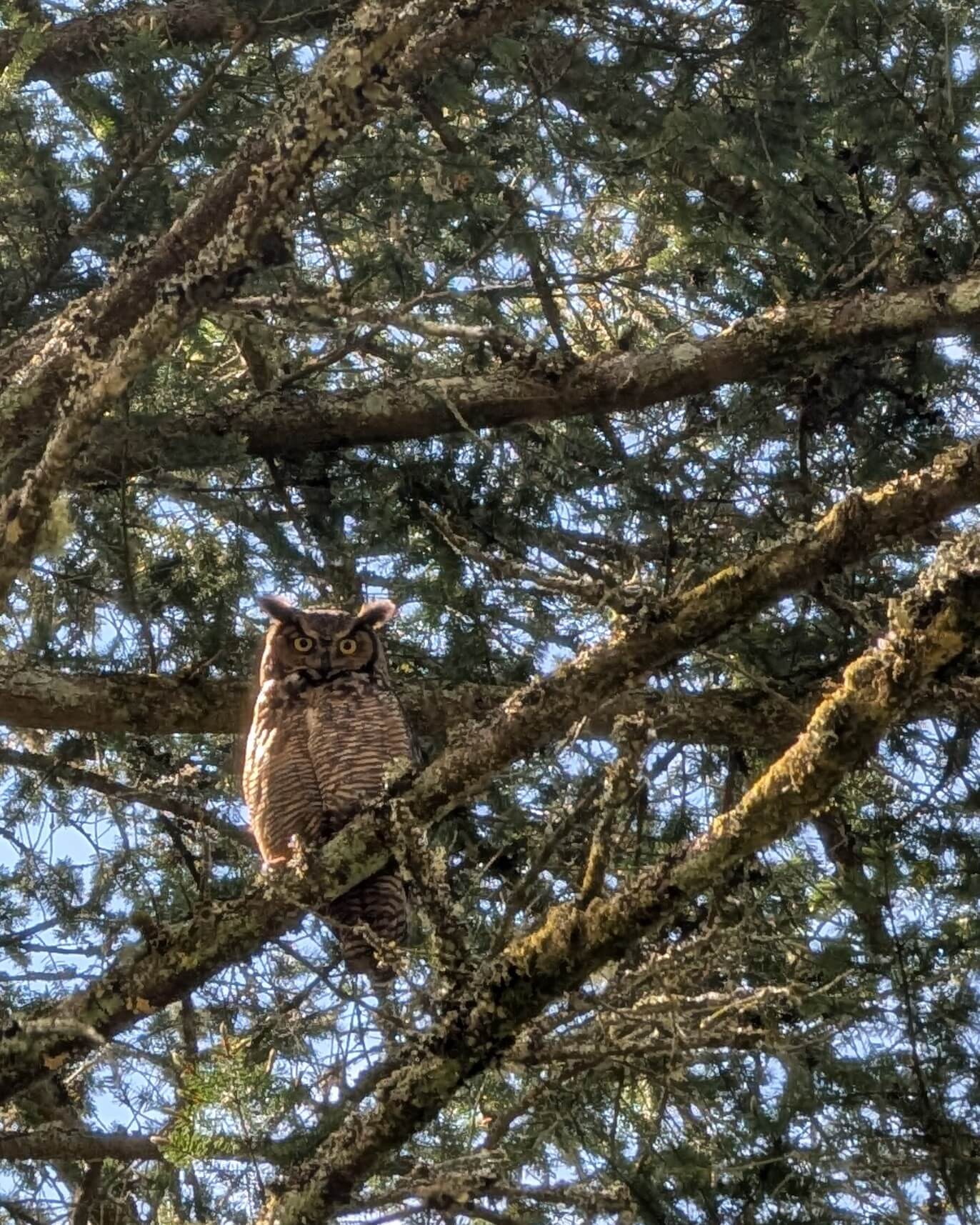
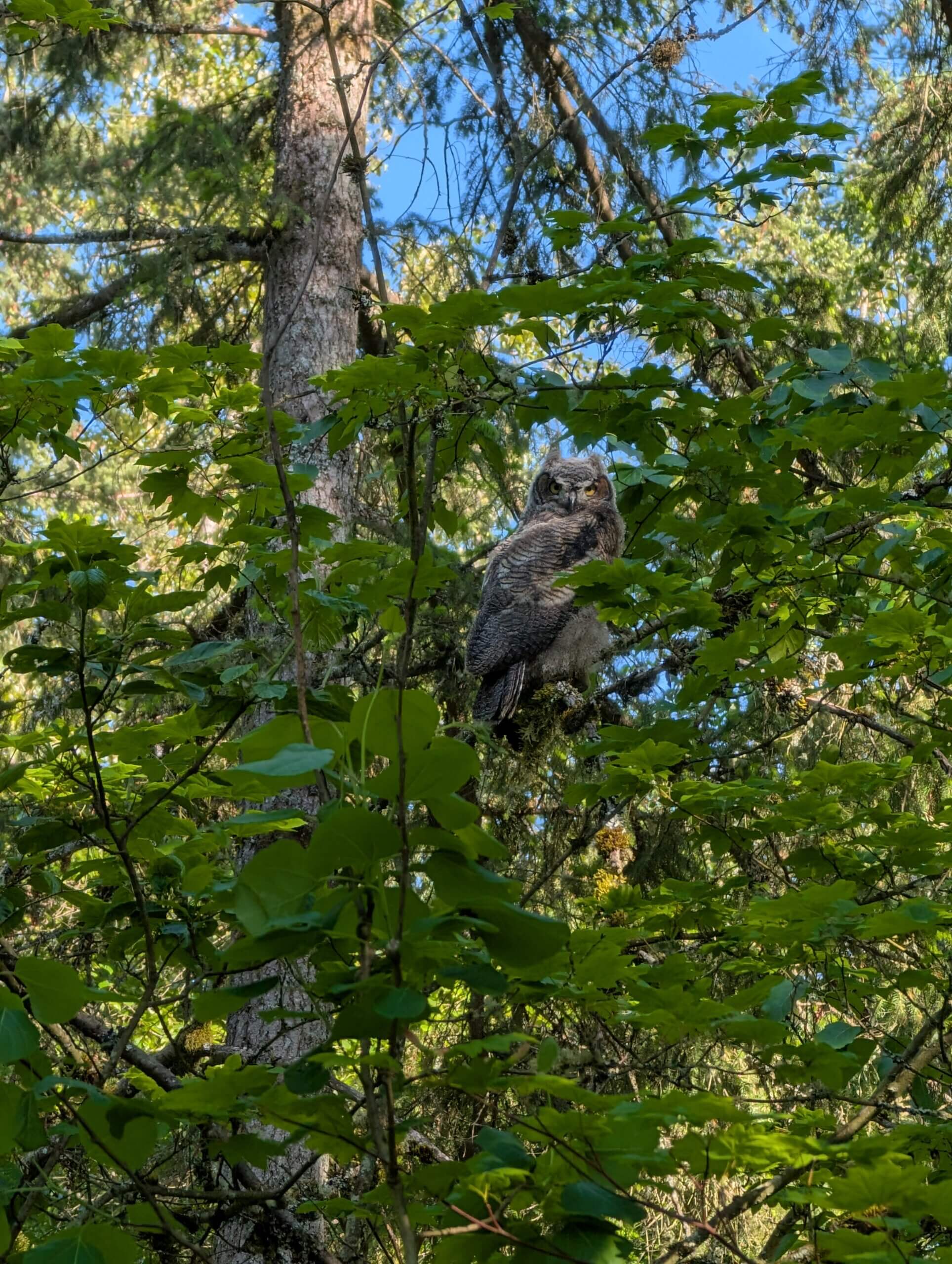
Early in the summer, the wildlife center cared for several young Great Horned Owlets. These owlets had ended up on the ground during a developmental stage called “branching” wherein they hop between branches before they are capable of flight. Normally, branching owlets jump from tree to tree following their parents while their flight feathers grow in and their muscles develop; however, because there are so many trees isolated in developed areas instead of part of a continuous network of overlapping trees, these owlets can fall to the ground trying to jump between trees, often sustaining injuries. And if their parents do not feel safe coming all the way to the ground to feed the young birds, these owlets may not get the nutrition their growing bodies need. This is where our Wildlife Rehabilitation Center comes in.
Three of the Great Horned Owlets under our professional care were not successfully returned to their parents after they regained their health, but we had a surprise second chance to reunite one owlet when their parent made an unexpected appearance and started calling for them. Acting quickly, our staff hurried not only the biological offspring to the site, but also the other two owlets whose parents had not been located in an attempt to foster all three owlets to the attending adult. Careful and discrete monitoring confirmed that the adult attended to all three young shortly after the reunification, and several weeks later, one of our interns confirmed that an adult Great Horned Owl was spotted perching with three healthy (and now fully flighted) juvenile owls near the original reunification site. Returning a healthy young wild animal to an attentive parent is always the preferred outcome, as it gives the young animal the best possible chance of succeeding in the wild, and we are thrilled that this parent took in two orphaned owls to boot!
As we shift into autumn, the young owls should be flying and hunting on their own but may still get into trouble as they gain experience: With daylight hours shortening, dawn and dusk coincide with traffic rush hour—a dangerous situation for owls and other birds of prey who prefer to hunt in the dim dawn and dusk hours along open swatches of land bordered by trees. This time of year, we see a disproportionate number of crepuscular (i.e., active at dawn and dusk) raptors admitted with injuries sustained from being hit by a vehicle, often while hunting along roadsides. Community members can help keep our raptors safe (and our rodent populations low) by respecting speed limits, driving carefully during dawn and dusk hours, and slowing down if you see a raptor along the road. Call the Wildlife Center if you suspect a raptor has been hit by a vehicle, and remember that because we are a hospital, we rely on you to bring wild animals to us for care! Our professional staff will help you make a plan to safely contain the animal and bring them into care.
The other major reason we see raptors in care in the fall and winter is due to lead poisoning. Raptors such as Bald Eagles dine on the remains of birds, mammals, and fish and may ingest small pieces of lead from hunting pellets or fishing gear and develop severe lead toxicity, even if the original metal shard is removed from the body later. The treatment for lead poisoning is long, stressful for the patients, expensive, and not always successful depending on the progression of the poison. In addition, signs of lead toxicity look startlingly like another disease: highly pathogenic avian influenza (or bird flu), which humans can contract, meaning people may be less willing to step in and bring these birds to the wildlife center.
A simple way for community members to help is to ensure that any equipment, tools, or projectiles used on the landscape are constructed with a material other than lead to prevent lead poisoning of raptors, waterfowl such as swans (who accidentally ingest lead pieces that have settled to the bottoms of waterways), fish, and the water itself. We all have a role to play in keeping our wildlife and ecosystems safe!