
Leading with Kindness: Why Positive Reinforcement is the Only Path Forward
Written by and shared with permission from Angela Lenz, OwneR & Lead Trainer at Tails-A-Wagging Doggie Daycare & Canine Training Center
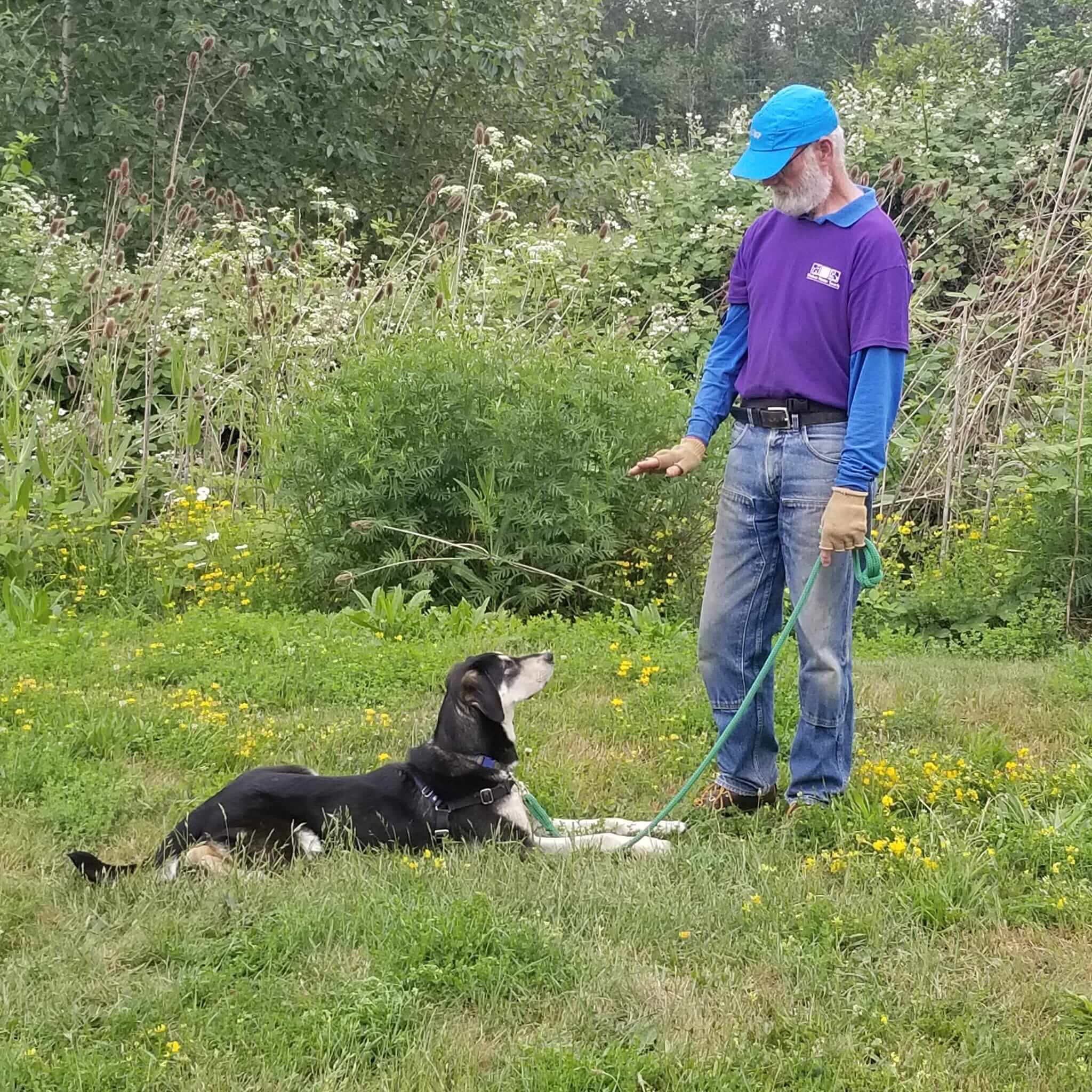
As animal lovers, our goal is always to build a community rooted in compassion, safety, and trust. This philosophy shouldn't stop when we open a training manual. For decades, traditional dog training relied on tactics of dominance, coercion, and fear. Today, modern veterinary science, animal behaviorists, and humane societies worldwide agree on a definitive truth: positive reinforcement is the only acceptable method for training—for all beings. Moving away from outdated practices isn't just a trend, it’s a critical evolution in how we understand and care for our best friends.
The Myth of the "Balanced" Approach
Terms like “corrective”, “adversarial”, or “balanced” training often sound harmless, but they mask an unfortunate reality. Balanced training claims to use the “best of both worlds”, rewarding good behavior while using physical corrections to punish the bad. This approach relies on aversive tools designed to motivate a dog through discomfort, pain, and intimidation. These may include:
- Choke Chains: Tools that may restrict oxygen cause severe damage to a dog's trachea, esophagus, vertebrae, and thyroid gland.
- Pinch/Prong Collars: Collars that dig metal spikes into the sensitive skin of a dog’s neck, risking physical injury and severe behavioral fallout.
- Electric/Shock Collars: Devices that deliver painful or distressing electrical stimulation to force compliance.
These methods are archaic. They don't teach a dog what to do; they merely hurt them in attempts to stop what they are currently doing.
The Hidden Dangers of Aversive Training
While physical corrections might suppress unwanted behavior in the short term, they come at a massive psychological cost. Dogs learn by association. For example, if a dog experiences pain or fear via a pinch collar whenever they see another dog or a stranger, they don’t learn to be friendly. Instead, they associate that dog or person with pain. This frequently can lead to severe behavioral escalation, in which a minor issue may transform into deep-seated fear, anxiety, and barrier reactivity. Worse still, aversive methods can cause a phenomenon known as learned helplessness. This occurs when a dog completely shuts down and stops reacting entirely because they realize they cannot escape the unpredictable discomfort. A shut-down dog isn't a trained dog; it is a broken dog.
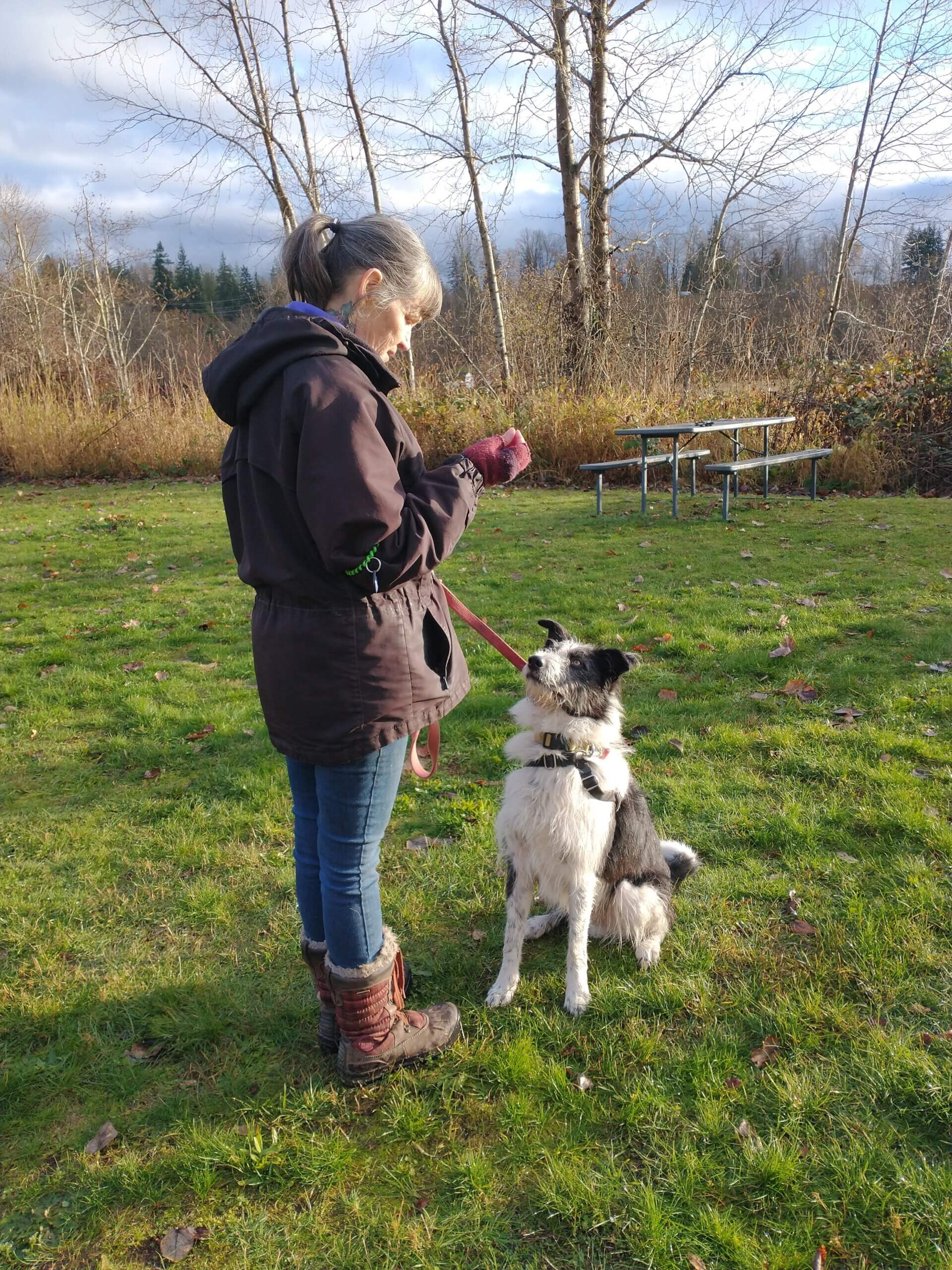
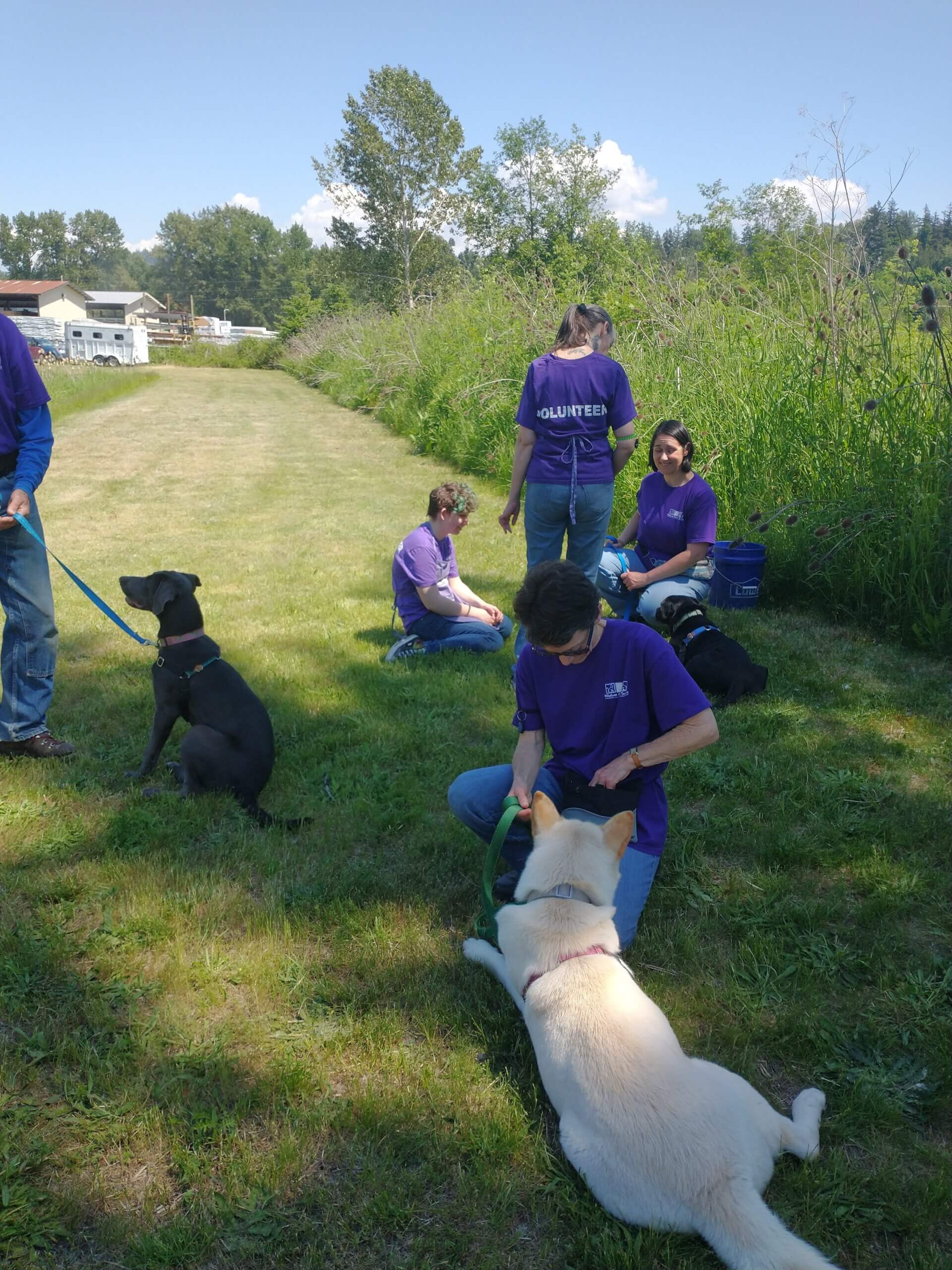
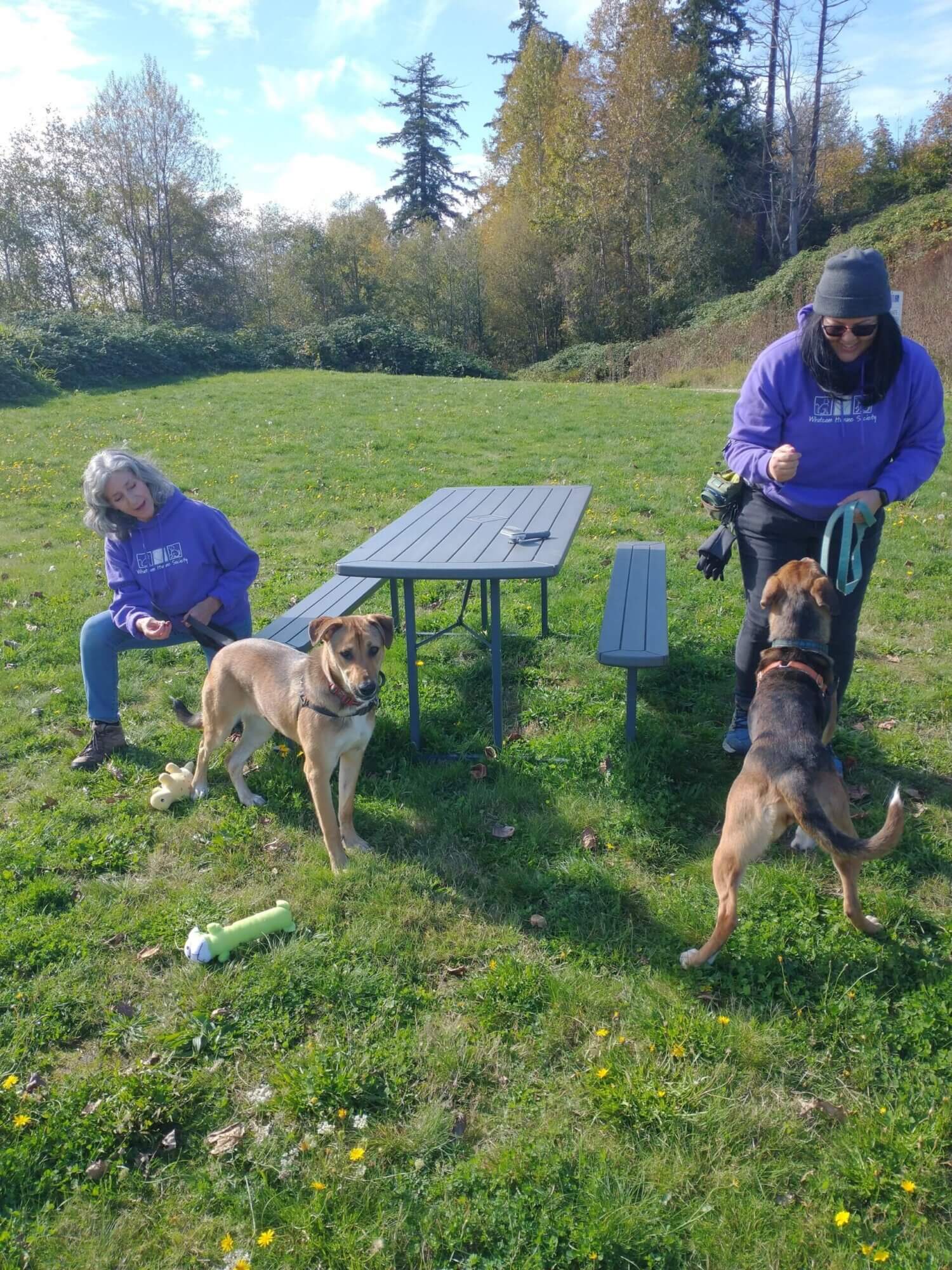
The above photos are from WHS’s Canine Companion Training, positive-reinforcement classes that take place weekly with a variety of the shelter dogs and volunteers to help the pups learn skills for navigating everyday life.
The Power of Positive Reinforcement
Positive reinforcement focuses on rewarding the behaviors we want to see, using high-value treats, toys, praise, and play. By setting our dogs up to succeed and reinforcing those successes, we build a reliable foundation of good behavior built on cooperation, not compliance. Science shows us that dogs that are trained with rewards learn faster, retain information longer, and experience significantly less stress. More importantly, positive reinforcement strengthens the human-canine bond. Your dog becomes an active, enthusiastic partner in the learning process because they trust you completely.
A Reflection of Us
At the end of the day, training is about communication, patience, and empathy. Dogs are doing the best they can to navigate a human world they didn't ask to be brought into. If you have to hurt a dog to train them, that says far more about you than it does the dog. Choosing force over education is a training shortcut born of a lack of understanding and tools, not a reflection of a “stubborn” animal. True leadership isn't about proving you can overpower a companion animal; it’s about having the patience to guide them kindly. Let's leave the outdated, painful tools in the past where they belong. By committing to exclusively using force-free, positive reinforcement methods, we can ensure our community remains a safe, loving place for every dog and the people who cherish them.