
The Big World of Little Animals
Q&A with whs small animals volunteer, Jennifer P.
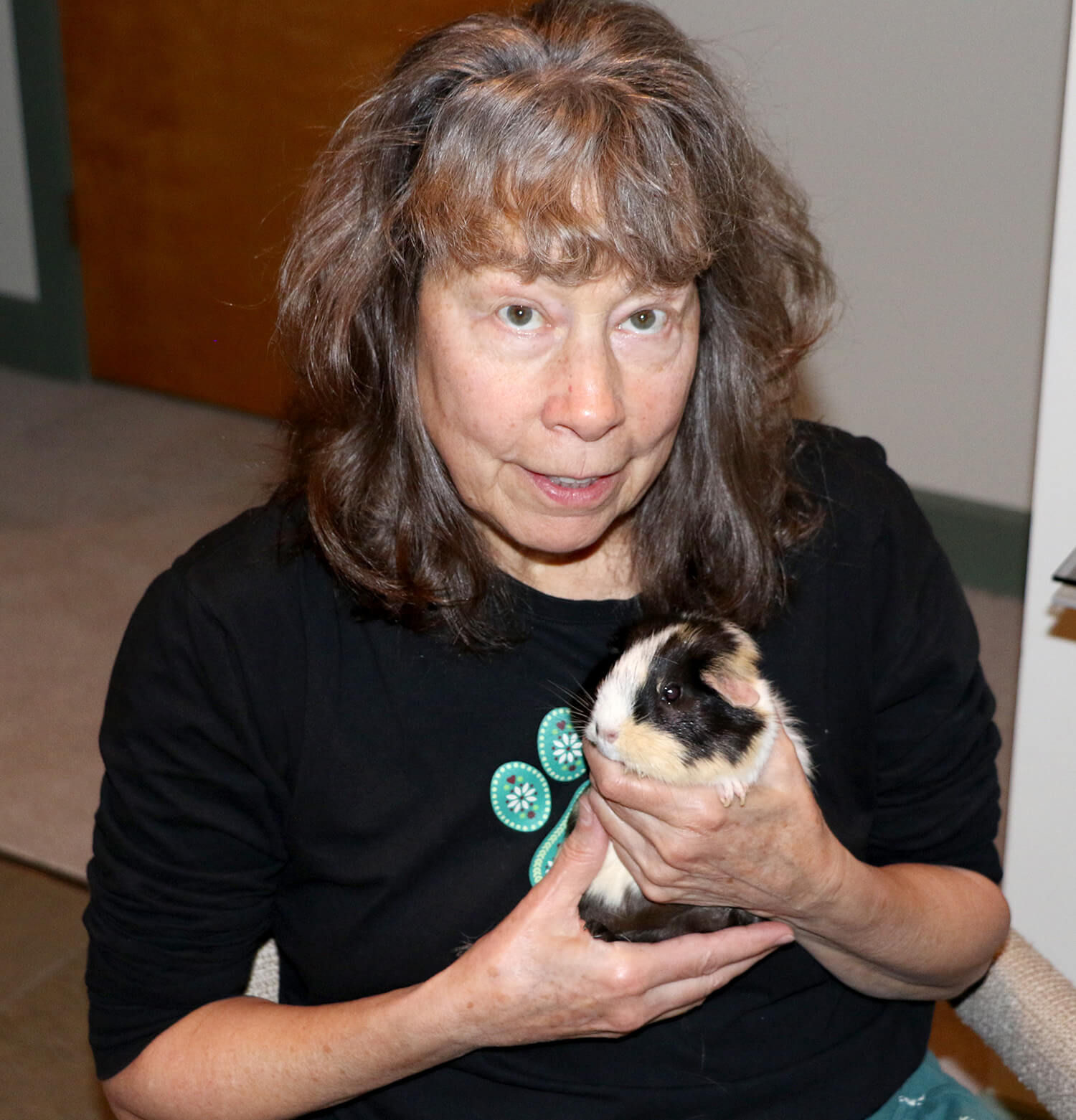
Pictured above: Jennifer and her oldest Guinea pig, Louise: "Louise is over 5 1/2 years old and still runs laps in her cage and demands her salad twice per day."
A WHS volunteer for 12 years and counting, Jennifer specializes in Guinea pig TLC. “I prefer small animals because they’re unique,” she said. “Everyone knows cats and dogs, but I get to meet birds, bunnies, piggies, chinchillas, ferrets, and others.”
Q: Can you share how you first learned about Guinea pig care?
JP: I have been involved in pet hedgehog rescue for 25 years—I am one of the founders of Hedgehog Welfare Society—so I was familiar with caring for small pets. As I began working with the bunnies and Guinea pigs in the Small Animal Room at Whatcom Humane Society, I became very fond of them and their differences and similarities to the hedgehogs I knew so well. I never planned to branch out into adopting Guinea pigs since I had several rescued hedgehogs…then one day, Luna the Guinea pig showed up. Luna was seized from a bad breeder/hoarder situation. Used as a breeder, her long flowing white hair was stained and matted, and she was terrified of people and all other Guinea pigs. She was taken home by the Foster Care/Volunteer Coordinator at the time, to give her a chance to recover and calm down and become more adoptable. When she was brought to WHS and placed in the Small Animal Room, I saw her all alone and looking so scared, and I asked for her story. Her foster had been reluctant to bring Luna in for adoption because she needed “a very special adopter”—one who would be fine with a piggie who did not want cuddles from people and who would not try to make her share a cage with another piggie. Since hedgehogs mostly don’t cuddle nor share their cages, I seemed like the perfect adopter and took her home. Luna was with me for 5 years minus 1 day and eventually allowed me to hold her on my lap (although she never did learn to like any other piggies!). She taught me so much about Guinea pig care. I’ve adopted and fostered many other piggies thanks to Luna.
Q: What are some basics of Guinea pig care that people new to living with them should know about?
JP: While they’re less work than a dog or cat because they don’t need to be walked and don’t try to escape outdoors, Guinea pigs do make a mess in their cage and it needs to be cleaned every day so that they aren’t resting or sleeping in wet or soiled bedding. They also require medical care at times and must be seen by a specialized exotic animals vet with Guinea pig experience. They must have fresh clean hay at all times (preferably Orchard Grass hay, which few people are allergic to) and hard wooden toys or houses to chew on, to keep their teeth trimmed since they grow constantly throughout their lives. It’s also good to know that their urine may be slightly cloudy even if they’re healthy due to minerals in it and may be red if you give them a strawberry or other red treat.
Q: What are some misconceptions about Guinea pigs and other small animals that you’ve encountered?
JP: That they don’t love their humans or pay attention to them. That is so untrue. They spend much of their time observing us and what we do, and figuring out how to respond. Anyone who’s had a Guinea pig knows how quickly they learn to “wheeeeek” at the sound of a plastic produce bag being opened. They will learn the sound of their kibble bowls being clinked together, they will learn to recognize your specific footsteps entering their room, and they will stand on their hind legs to greet you. Not all of them want to be held and cuddled, but they all pay close attention to us. And while it is true that they should not live alone, throwing any two piggies or bunnies together in a cage is a very dangerous thing to do: They need to be introduced safely and gradually (if you adopt from WHS, we can teach you how)—and there are some, like Luna, for whom simply having other piggies in the room to talk to is the best solution.
Q: Why would you encourage folks to consider Guinea pigs and other small animals when adopting?
JP: For the reasons listed above, and because when you’re freed from the need to take them out for walks or protect furniture from scratches and vacuum up a lot of fur, you can relax and watch them in their warm comfy homes, just being their silly selves. I love to sit in my pet room and weave or watch TV and just watch my piggies running laps in their cage, or leaping into the hay bin and burying themselves, or suddenly lying down and taking a quick nap before popcorning around the cage. And if you spend the time to make them comfortable with snuggling, a Guinea pig in your lap is a special treat.