
Wildlife Field Notes: What To Watch For During The Changing Seasons
written By Anna Schwabe, Wildlife Rehabilitation Center Supervisor & Licensed Wildlife Rehabilitator
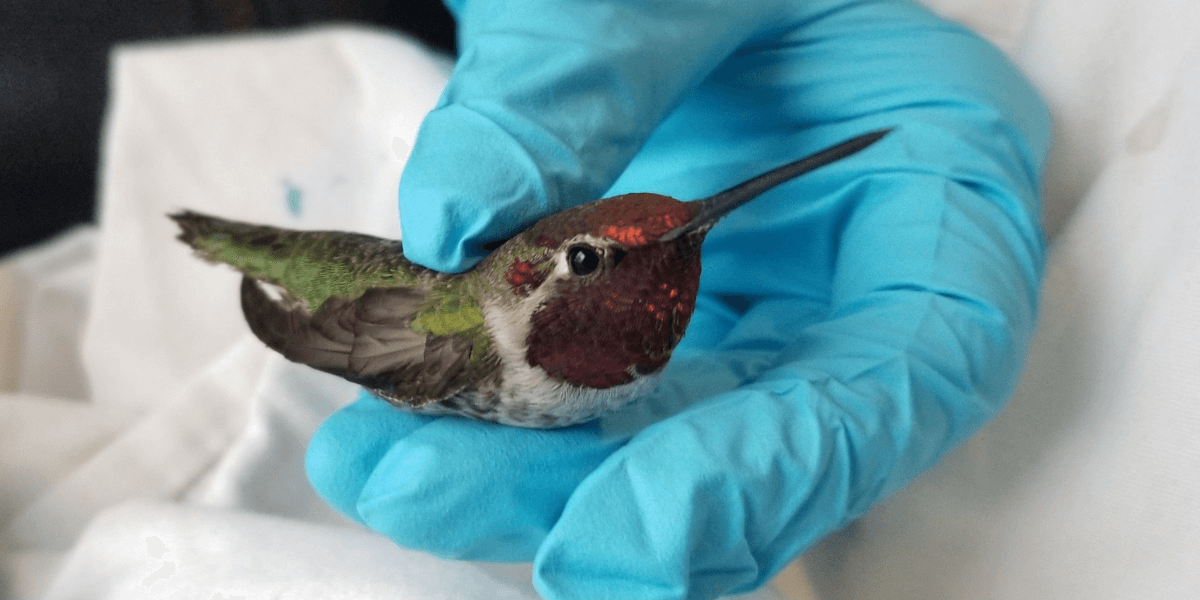
As the seasons change and the days get steadily longer, the wildlife we see around us will start to shift. We will see birds migrating north, and our much missed summer residents will begin to return. The spring is often a season of plenty for wildlife, but it comes with its own challenges as well. While the rainstorms create seasonal pools for wildlife to gather and thrive around, the volatile temperatures can cause some species to be caught in the cold. Hummingbirds in particular are common spring patients, often arriving at the WHS Wildlife Rehabilitation Center in a state called torpor: Their metabolism slows down so much due to the cold that they fall asleep and often appear to be dead.
Overnight freezes can also cause hummingbirds’ tiny feet to freeze to feeders—and when feeders are not emptied and cleaned out regularly, deadly bacteria and fungi can grow in the sugary nectar, causing the hummingbirds to fall ill. You can help keep hummingbirds safe this season by cleaning feeders at least once per week and providing hummingbird-safe heat sources to prevent the nectar from freezing to the feeder’s perches.
This time of year we also look back on the retreating winter and forward to the coming summer. The WHS Wildlife Rehabilitation Center saw a sharp increase in northern saw-whet owl admissions this winter compared to years past. We don’t have data for what caused this trend, but we are glad to know there is a thriving population of these tiny owls in our own backyards! The owls admitted to our center came for a variety of reasons: window strikes, car strikes, and cat and dog attacks are among the common culprits. Remember to drive slowly on forested roads at dawn and dusk, use window clings or UV anti-reflection liquid on windows, and keep dogs on a leash and cats contained or on a harness to keep these important birds safe.
Supervising outdoor dogs and cats can also help keep baby mammals and birds safe! Squirrels, rabbits, and opossums will start having babies soon, and these young animals are extremely vulnerable to even well-meaning domestic animals and rely on their mothers coming home safely from gathering food.
Keep an eye out for squirrel nests in trees and rabbit nests on the ground while doing yard work, and always call the WHS Wildlife Rehabilitation Center before picking up any babies that look like they might be orphaned. If you have found a sick, injured, or orphaned animal, please give us a call at 360-966-8845 and do not attempt to keep or care for wildlife. We appreciate your concern for wildlife in need, and we’re here to help you both!
Found a sick, injured, or orphaned wildlife animal?
Please give our Wildlife Rehabilitation Center staff a call at 360-966-8845 and do not attempt to keep or care for wildlife. Thank you!